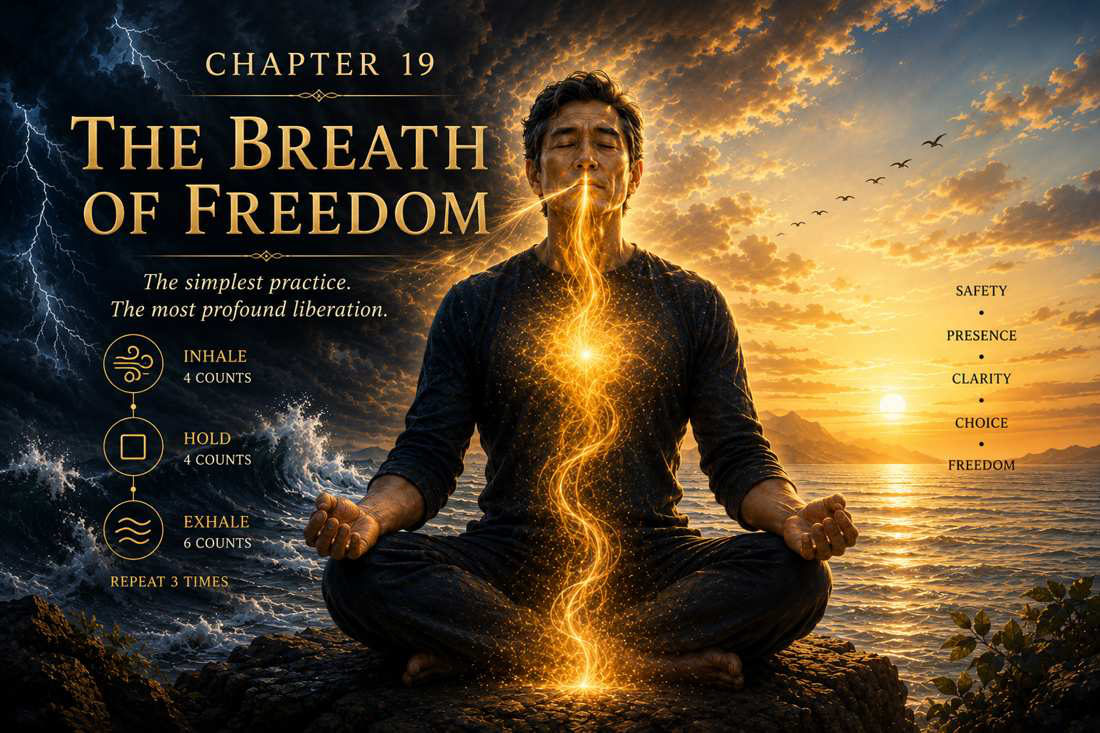
Find your Breath
Breath is so central to life that we barely notice it until breathing becomes difficult. Anyone who has experienced bronchitis, pneumonia, asthma, or another condition that makes each breath suddenly precious understands how quickly something automatic can become the center of awareness.
Breath also changes with our state. When we become frightened, angry, startled, or highly activated, breathing can become faster, shallower, or more irregular as the body prepares for action. Heart rate may rise, attention may narrow, and the sympathetic branch of the autonomic nervous system can help mobilize us to respond. That is useful when we genuinely need to act.
The complication is that human beings can become activated by far more than immediate physical danger. An argument, a frightening thought, a difficult email, uncertainty about someone we love, or an old story suddenly awakened can all alter the way we breathe.
If breathing becomes excessively rapid or deep, we can exhale carbon dioxide faster than the body produces it. That drop in blood carbon dioxide can contribute to dizziness, tingling, chest discomfort, light- headedness, and the unsettling feeling that something is wrong. Those sensations can then add another layer of alarm to the experience.
This is one reason I begin the Joy Protocol with breath. We cannot always talk ourselves out of activation, and we do not always need to.
Sometimes the first useful move is much simpler: interrupt the momentum long enough to notice that we are breathing.
Human beings have worked intentionally with breath across contemplative, spiritual, athletic, and healing traditions for centuries. Modern research is also exploring how slow, controlled breathing can influence autonomic activity, heart rate, blood pressure, attention, and subjective stress. The evidence does not suggest that one breath solves everything. It does suggest that breathing is one of the few automatic bodily processes we can also influence voluntarily, making it a remarkable doorway between physiology and conscious choice.
There are many ways to practice. The U.S. military, for example, teaches forms of controlled or tactical breathing to help service members manage physiological arousal under stress. One familiar version is box breathing: inhale for four counts, hold for four, exhale for four, pause for four, and repeat.
My own preference when I am activated is often even simpler: breathe gently in, then allow the exhale to be a little slower and longer. Repeat without forcing anything. The purpose is not to perform breathing correctly. It is to interrupt automatic momentum and become available to yourself again.
This matters because the first step of the Joy Protocol is not think differently. It is Find Your Breath.
Before the Witness, before forgiveness, before losing the story, before any attempt to understand what is happening, there is this most elemental human movement: air entering and leaving the body.
We arrive in the world and begin to breathe. We spend an entire lifetime doing it, mostly without noticing. And at any moment, the next breath can become an invitation to return.
Try This: Three Slow Exhales
Let your next breath arrive without forcing it. Inhale gently, then allow the exhale to last a little longer than the inhale. Do that three times.
Do not try to become calm. Simply notice what changes, if anything: your shoulders, jaw, chest, thoughts, pace, or the amount of space you feel before the next reaction.
You have not solved the story. You have simply interrupted it long enough to come back into the room.