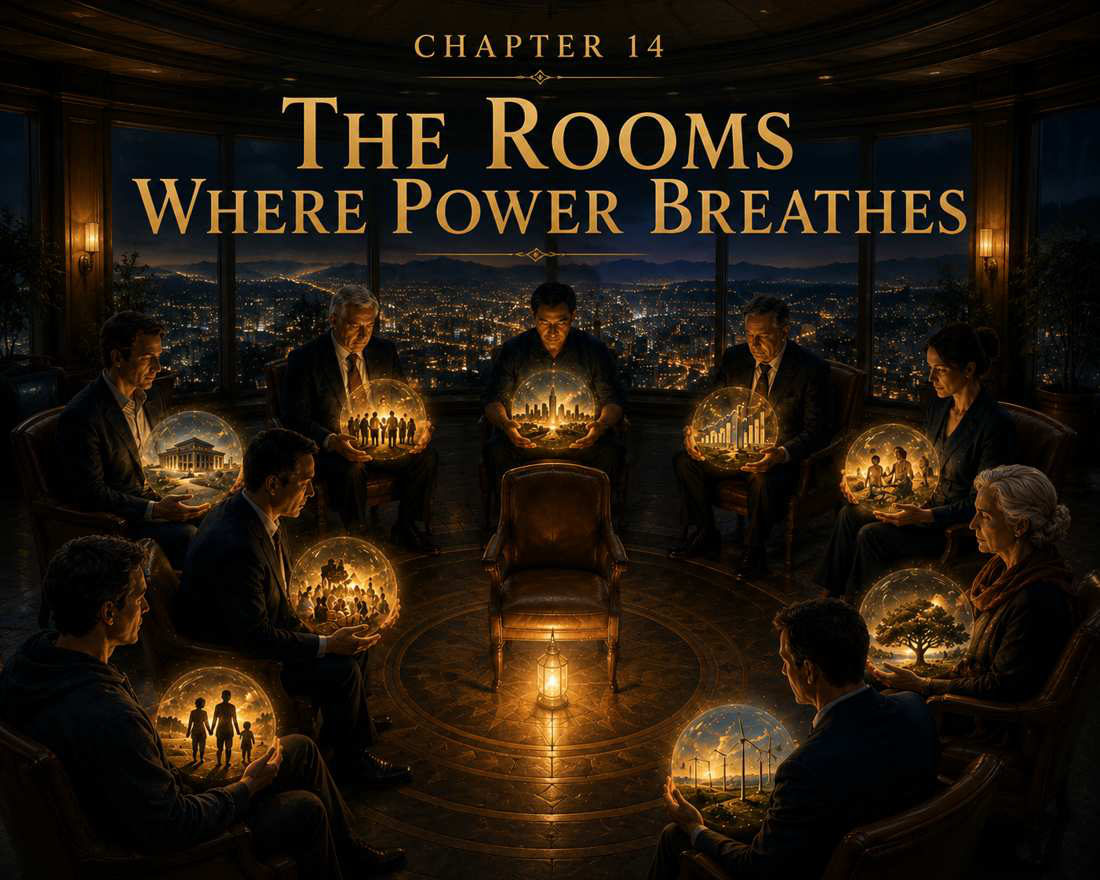
The Rooms Where Power Breathes
I entered executive search in 1988 with no pedigree, no blueprint, limited business experience, poor Mandarin, and very little idea where the path would lead. What I did have was relational instinct. I could read people quickly, communicate through story and metaphor, learn fast, connect interests, and care deeply about helping people make decisions aligned with who they were and what they were becoming.
Over time, that instinct carried me into rooms filled with extraordinary levels of responsibility, ambition, pressure, wealth, intelligence, and influence: founders, CEOs, global boards, private equity firms, multigenerational family businesses, and leaders carrying systems far larger than themselves.
For nearly four decades, I lived inside the emotional weather of leadership. One pattern appeared repeatedly: the more responsibility someone carried, the fewer places they often had where they could stop being the person expected to know what to do. Leaders become extraordinary adapters. They learn to remain calm under pressure, absorb complexity, make decisions with incomplete information, reassure others, and carry enormous weight for long periods of time.
Yet underneath that capability can live something much more tender: uncertainty, exhaustion, old adaptations, family strain, fear of disappointing people, and the pressure to keep holding everything together even when the person doing the holding is running out of room themselves. I recognized those patterns partly because versions of them lived inside me too.
Over the years, my work moved far beyond traditional executive search. I began working more like a producer assembling the human architecture around companies: building boards and helping them function as masterminds, forming leadership teams, creating strategic partnerships, connecting capital and M&A relationships, guiding transitions, and helping leaders hold complexity long enough for something meaningful to emerge.
I came to call this Human Capital Advisory. It never felt transactional to me. It felt architectural, though not in the sense of buildings. The architecture was trust, alignment, values, principles, practices, relationships, leadership, and the human systems through which strategy either comes alive or quietly dies.
Looking back, much of that work was an early form of what I would later understand as Relational Intelligence. When powerful people felt safe enough to stop performing for a few minutes, the conversation often changed completely. The question was no longer only, What should I do next? It became, What kind of life am I actually trying to live?
I began asking questions that become surprisingly rare once someone is considered important. What happens after achievement? What remains when the title changes? What still feels alive? What wants to emerge now? What would enough look like? What would freedom look like? What would play look like?
One question became especially important to me: When you are ninety years old, sitting in a rocking chair in a place you love and
looking back across your life, what do you want to see? What would you wish you had chosen differently?
The answers were rarely about another title, another transaction, or another line on a résumé. They were usually about people, relationships, freedom, time, meaning, courage, family, contribution, and the parts of life that had been postponed while everything urgent kept winning.
Again and again, I encountered extraordinary people who had become highly skilled at holding companies, teams, investors, families, and institutions together while gradually losing touch with parts of themselves. That was the deeper meaning of a phrase that kept returning to me: the holders needed holding too.
These years also changed the way I understood leadership. Intelligence, ambition, expertise, and decisiveness matter enormously, but they are not enough. The leaders I trusted most were increasingly those who could remain grounded inside complexity, hold strength without domination, listen without becoming passive, adapt without abandoning principle, and create enough relational coherence that other people could think clearly around them.
I began to see this as a rebalancing of qualities that cultures often label masculine and feminine: structure and receptivity, decisiveness and listening, force and care, boundary and relationship. Not replacing one with the other, but integrating both more fully.
That realization changed my work, but it also exposed a harder question. I had spent years helping other people navigate leadership,
identity, pressure, and transition. How deeply had I actually done that work in myself?
The answer would take me far beyond boardrooms.